Naira Redenomination Rumors: Separating Fact from Panic
A WhatsApp forward claims the CBN is about to knock three zeros off the Naira overnight. Here is what redenomination actually is, why it wouldn't fix anything on its own, and what the CBN is really signaling.
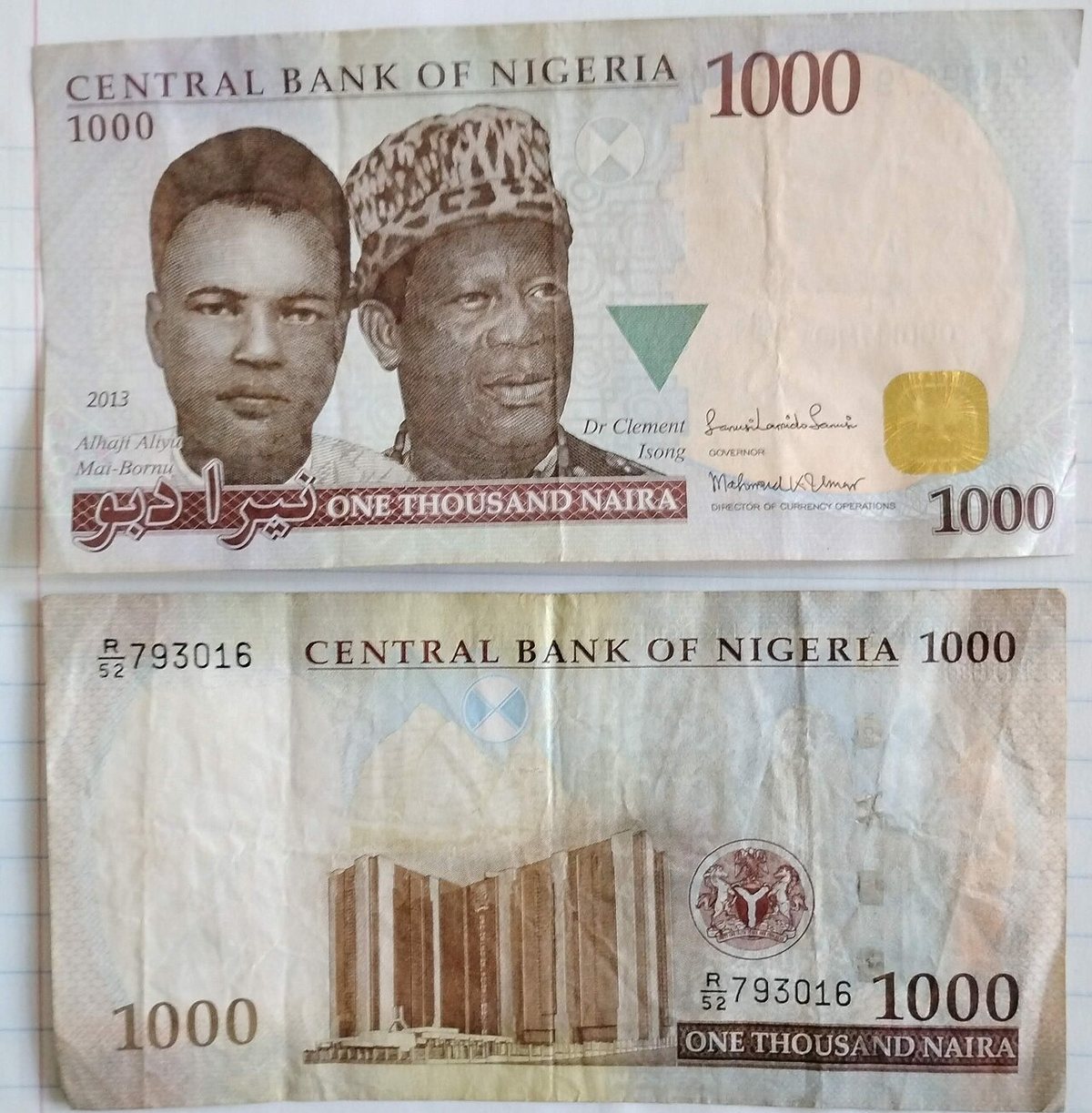
Every few years, the same rumor resurfaces in Nigerian group chats: the government is about to slash zeros off the currency overnight, and if you don't spend your cash now, it will become worthless.
It happened again this February. A screenshot of an unrelated CBN circular got captioned with "NEW NAIRA NOTES: 1000 = 1" and spread faster than the actual policy document it was lifted from. So let's separate the mechanics from the panic.
Executive Summary
- 01.Redenomination changes the number printed on the note. It does not, by itself, change what that note can buy.
- 02.Nigeria has never actually redenominated — but it came within weeks of it in 2007, and that episode is the single most useful thing to understand here.
- 03.A currency redesign is a different thing entirely, and Nigeria has done that twice — in 1984 and again in 2022. The second one is why this rumor now carries real fear.
Redenomination vs. Devaluation: Not the Same Animal
These two words get tangled in every rumor cycle, but they describe opposite problems.
Devaluation is what already happened to you. The Naira lost purchasing power against the Dollar — your ₦1,500 buys what ₦460 used to buy against a dollar a few years back. That's real, and it's already priced into your life.
Redenomination is cosmetic. A government simply agrees that ₦1,000 old notes become ₦1 new notes. Prices, salaries, and bank balances are supposed to rescale by the same factor, so in theory nobody is richer or poorer the day it happens. Ghana did exactly this in July 2007, knocking four zeros off the cedi. Zimbabwe did it repeatedly through the 2000s — and Zimbabwe is the cautionary tale, because redenomination without fixing the underlying money-printing problem just meant the zeros grew straight back.
"Cutting zeros off a currency without fixing the reason it lost value is like changing the label on a shrinking bottle. The bottle is still shrinking."
Nigeria Already Tried This Once — In 2007
This is the part almost nobody in the group chats knows, and it's the most useful precedent we have.
In August 2007, then-CBN Governor Charles Soludo announced a "Strategic Agenda for the Naira" that included redenominating the currency by dropping two zeros — ₦100 would become ₦1. It was a genuine, announced policy from the same institution people are speculating about today. It also included plans to make the Naira convertible.
It never happened. The presidency under Umaru Yar'Adua publicly countermanded it within weeks, on the grounds that the CBN had overstepped by announcing such a move without executive approval. The proposal was shelved and has never been formally revived.
Two Lessons From 2007
- 01.A real redenomination arrives as a formal, named policy from the Governor — not a forwarded screenshot. In 2007 it was announced at a press conference and covered by every outlet in the country.
- 02.It is a political decision as much as a monetary one. Even a sitting CBN Governor could not carry it alone.
Why the Fear Is Real Even Though the Rumor Isn't
Here is the honest part: Nigerians are not being irrational when this rumor makes them anxious. They are pattern-matching to something that genuinely happened, and recently.
In October 2022, the CBN under Godwin Emefiele announced a redesign of the ₦200, ₦500 and ₦1,000 notes, paired with tight limits on cash withdrawals. That was not a redenomination — the notes kept their face value. But the rollout collapsed. Old notes were demonetized faster than new ones could be distributed, and between December 2022 and February 2023 the country went through a genuine cash famine: people queued for days at ATMs, POS agents charged punitive premiums for cash, and there were protests in several states. The Supreme Court eventually intervened in March 2023 to extend the life of the old notes.
Nigeria had done a currency swap before, too — the 1984 note exchange under the Buhari military government, aimed at currency trafficking. But 2022 is the one living memory is built on.
"The 2022 cash crunch taught a whole country a real lesson: the danger isn't the policy on paper, it's the execution. That's a rational fear. It's just not evidence that a redenomination is coming."
So when a screenshot claims the CBN is about to revalue the currency, it lands on people who have already lived through a botched currency transition. The fear is earned. The specific claim still isn't true.
Nigeria's Actual Currency History
Put the whole sequence in one place and the pattern becomes obvious — Nigeria changes its notes fairly often, and has never once changed its units.
Every Time Nigeria Touched Its Currency
- 1973 Nigeria abandons the pound, shilling and pence for the Naira and kobo. A decimalization — a change of unit, not a cutting of zeros.
- 1984 The Buhari military government executes a currency swap, changing note colours to invalidate hoarded cash. Face values unchanged.
- Aug 2007 CBN Governor Charles Soludo announces a genuine redenomination: drop two zeros, ₦100 becomes ₦1. The presidency countermands it within weeks. Shelved.
- Oct 2022 CBN announces a redesign of the ₦200, ₦500 and ₦1,000 notes with severe cash withdrawal limits. Face values unchanged.
- Dec 2022 – Feb 2023 Rollout collapses into a national cash famine. ATM queues, POS premiums, protests.
- Mar 2023 The Supreme Court intervenes to keep the old notes legal tender.
Four interventions in five decades, and not one of them removed a zero. Meanwhile, the single time redenomination was seriously proposed, it died on political rather than economic grounds.
What a Redenomination Would Actually Involve
Suppose it did happen tomorrow. It's worth understanding the machinery, because the mechanics themselves explain why no government undertakes this casually.
Every price in the economy has to be restated. For a transition period — Ghana ran roughly six months of dual display in 2007 — shops must show both old and new prices side by side so people can build intuition for the new numbers. Every bank balance, every loan schedule, every pension entitlement, every insurance policy and every long-term contract has to be rescaled by the same factor on the same date.
Then there's the software. Every core banking system, every POS terminal, every ATM, every payroll package and every accounting ledger in the country needs updating and testing. For a nation running the transaction volumes Nigeria now runs through NIBSS, that is a genuinely enormous engineering programme — and it has to be flawless, because a rounding error applied at national scale is a wealth transfer.
Then the notes themselves: printing an entire new currency stock, distributing it to every corner of a country of 200+ million, and withdrawing the old stock in an orderly sequence. That is exactly the step that failed in 2022, when the CBN attempted a far simpler operation.
"The 2022 redesign was a fraction of the complexity of a true redenomination — and it still produced queues, protests and a Supreme Court case. That is the strongest practical argument that this isn't quietly in motion."
The Honest Case For Redenomination
To be fair to the idea: it isn't stupid. There are genuine arguments, and they're worth stating properly rather than dismissing.
- Transaction friction is real. Large numbers are harder to compute with, take more digits in every database field, and add cognitive load to routine pricing.
- Cash handling costs money. When the largest note is small relative to typical purchases, people must carry and count more paper — which raises printing costs and slows commerce.
- Signalling. Countries sometimes redenominate to mark the end of an inflationary period, as a deliberate psychological reset.
That third point contains the catch, and it's decisive. Redenomination works as a closing ceremony for inflation that has already been defeated. It fails completely as a strategy for defeating inflation. Ghana's 2007 exercise is often cited as a success, but it followed a period of relative macroeconomic stabilization. Zimbabwe's repeated attempts failed because the underlying monetary problem was never addressed — the zeros simply grew back.
Nigeria's inflation, while easing from its 2024 peak, has not been decisively conquered. On the "closing ceremony" logic, the ceremony would be premature.
What Is Actually on the CBN's Desk
Not new zeros. The genuine post-2023 agenda has been FX liberalization — collapsing the multiple exchange-rate windows into one market and narrowing the parallel-market premium — alongside the bank recapitalization programme running to its March 2026 deadline. Neither of those requires reprinting a single note.
That's also a useful filter for the rumor. A central bank that is mid-way through the largest banking sector restructuring in twenty years does not simultaneously launch a currency redenomination. There is not enough institutional bandwidth in any central bank to do both at once, and attempting it would jeopardise the programme that actually matters.
Questions People Actually Ask
How would I know if a real redenomination were announced? +
Would my bank savings lose value if it happened? +
Should I hold cash or convert to dollars because of this rumor? +
Is the 2022 note redesign the same thing as redenomination? +
How to Test the Next Currency Rumor You Receive
- ☐ Check whether the claim appears on cbn.gov.ng — not a screenshot, the actual site
- ☐ Look for a named official and a specific dated circular number
- ☐ Ask whether a transition period and dual-pricing rule are described (a real one always has both)
- ☐ Notice whether the message creates urgency to act today — that is the signature of a scam, not a policy
- ☐ Before forwarding, confirm at least two established outlets are reporting it independently
Tap an item to cross it off.
The Actual Risk: FX Pass-Through, Not Redenomination
If you want to worry about something real, worry about the FX pass-through on anything imported. Every naira you spend on foreign goods still competes for the same limited dollar supply — and that pressure shows up as price inflation, not a zero-cutting event.
Use the tool below to see exactly how much dollar demand a single purchase creates, and why that — not a redenomination rumor — is the mechanism actually eroding your Naira's value.
The Verdict
Ignore the WhatsApp countdown. If a real redenomination were imminent, it would arrive via an official CBN gazette and a transition period, not a leaked screenshot. Your energy is better spent tracking the FX unification math than hoarding cash before a zero-cut that isn't scheduled.
This article is a fundamental analysis based on publicly available financial data. It is intended for educational purposes only and should not be taken as a recommendation to buy or sell any specific security.
Market data is subject to change. The author (Odiete) may hold positions in some of the assets mentioned. Please consult a licensed financial advisor before deploying capital.

Odiete Oghenesuvwetoba Efemena
Technology Risk & IT Audit
Computer Science graduate and ICAN Professional-level candidate working toward technology risk and IT audit. I write about Nigerian fintech, financial policy, and the systems and controls underneath them.