Second Half Strategy: Rebalancing Your Portfolio for H2 2026
Six months of policy shocks, rate moves, and a full banking sector reshuffle later — is your portfolio still allocated the way you set it up in January, or has drift quietly changed your actual risk exposure?
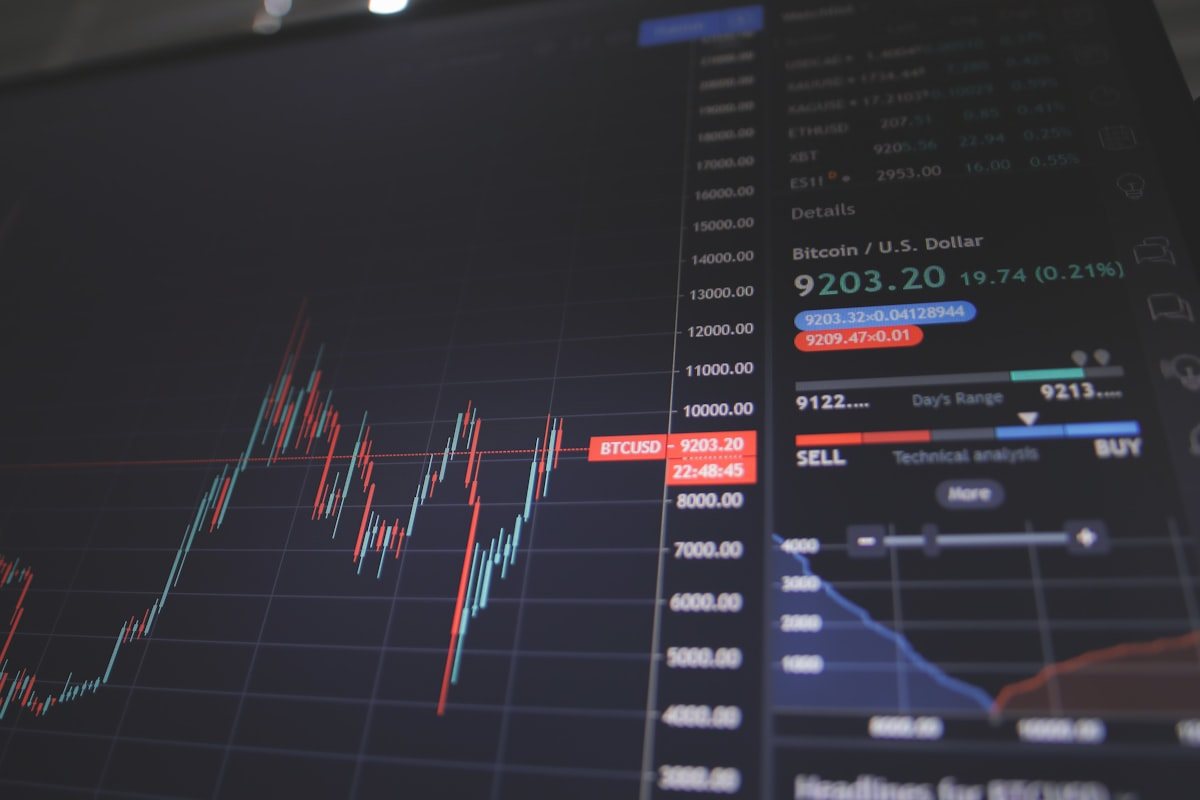
Nobody rebalances a portfolio by accident. It requires a deliberate pause, and the midpoint of the year is as good a forcing function as any to actually do it.
Since January, we've covered a banking recapitalization deadline, a Q1 GDP print, tax reform, and a handful of macro shocks. Each of those events nudges the relative value of every asset class a little differently — which means the neat allocation you set up six months ago has almost certainly drifted from what you intended.
Why Drift Happens Even If You Never Touch Anything
If equities rallied while your T-Bill allocation just sat there earning fixed interest, the equity slice of your portfolio is now a bigger share of your total wealth than you originally chose. Nobody "decided" to take on more equity risk — it just happened, silently, as a side effect of one asset class outperforming another.
Nigerian investors have just lived through an unusually strong run of exactly this. The NGX All-Share Index returned roughly 46% in 2023 and a further 38% in 2024, with 2025 continuing to set record highs. Anyone who set an allocation in early 2023 and never touched it again is now running a materially more equity-heavy book than they chose.
What made the period genuinely unusual is that the safe asset was paying well too. As the MPR climbed to 27.50% by late 2024, Treasury Bill yields followed — at points in 2024 one-year paper cleared north of 20%, briefly touching the high twenties. Nigerian savers faced a rare situation: a risk-free instrument paying more than 20% while the stock market returned nearly 40%.
That environment has been shifting. As inflation eased through 2025 and the MPC began cutting, fixed-income yields came down from their peaks — which is precisely the kind of regime change that should trigger a rebalancing review rather than autopilot.
// The Silent DriftJan_Target = { equities: 40%, fixed_income: 60% };// 6 months of differential returns later...Jun_Actual = { equities: 52%, fixed_income: 48% };// You are now running a riskier book than you signed up for.
The Rebalancing Question, Reframed
Rebalancing isn't about predicting where markets go next. It's about periodically re-asking a question you already answered once: given my actual risk tolerance and time horizon, what allocation should I be holding right now? If the honest answer still matches your current holdings, you don't need to touch anything. If it doesn't, drift has quietly done something you didn't choose.
"You don't rebalance because the market did something wrong. You rebalance because your portfolio stopped matching the person you were when you built it."
The Portfolio You Already Own and Never Rebalance
Most salaried Nigerians hold a substantial investment portfolio they never think about: their Retirement Savings Account.
Under PenCom's multi-fund structure, RSAs sit in one of several funds with materially different risk profiles. Fund II is the default for contributors under 50; Fund III, with a lower equity ceiling, is the default from 50 upward; Fund I is the more aggressive option you must actively opt into; Fund IV is for retirees. There is also a non-interest option for contributors who want Shariah-compliant treatment.
Two things follow. You are automatically moved from Fund II to Fund III when you turn 50 — a real, unannounced change in your risk exposure that happens on a birthday. And if you are young, far from retirement, and have never looked at your PFA statement, you are almost certainly sitting in the default rather than the allocation you would choose deliberately. Switching is permitted, and most contributors never do it.
Re-Answer the Question First
Before moving a single Naira, it's worth re-checking whether your risk profile itself has shifted — a new dependent, a new business, a new income source can all change the right answer even if the markets hadn't moved at all.
If your profile still lands in the same room as it did in January, the second half of the year is about discipline: trimming what's overgrown, topping up what's lagged, and getting back to the allocation you actually chose on purpose.
Why Rebalancing Feels Wrong Every Single Time
Here is the part that makes rebalancing hard in practice, and it has nothing to do with arithmetic.
Rebalancing requires selling your winners to buy your laggards. Every instinct objects. The winners have momentum, everyone is talking about them, and the laggards look like mistakes. You are being asked to take money away from what's working and give it to what isn't.
Reframed, the discipline is obvious: rebalancing is a mechanical rule that forces you to sell high and buy low, at a moment when your judgement is least likely to do so voluntarily. It removes the decision from the part of your brain that is most confident and most wrong.
"If rebalancing feels comfortable, you're probably not doing it. The discomfort is the mechanism working."
Two practical rules make it survivable. Use threshold rebalancing rather than calendar rebalancing: act when an allocation drifts more than five percentage points from target, not simply because six months elapsed. And rebalance with new contributions first — directing fresh savings into the underweight asset moves you toward target without selling anything, which sidesteps both the transaction costs and the emotional resistance entirely.
The Currency Question Nigerians Cannot Avoid
Standard portfolio advice assumes your currency roughly holds its value. That assumption has not described Nigeria, and it changes the analysis materially.
An investor whose assets are entirely Naira-denominated is running a concentrated bet on the Naira, whether or not they think of it that way. Between 2023 and 2024 the Naira moved from around ₦460 to beyond ₦1,500 against the dollar. A Naira portfolio returning 30% over that period lost heavily in dollar terms.
Whether that matters depends entirely on what your money is for. If your liabilities are Naira liabilities — Nigerian rent, Nigerian school fees, a Nigerian retirement — then Naira assets are correctly matched and the dollar comparison is largely academic. If you have dollar-denominated goals — foreign education, relocation, international travel, imported goods — then Naira-only assets leave you exposed to precisely the risk that has actually materialised.
The honest conclusion is not "hold dollars." It is match the currency of your assets to the currency of your future obligations. For most Nigerians that means predominantly Naira with some diversification; for someone planning to educate a child abroad, it means considerably more.
Before You Move Anything: The Costs
Rebalancing is not free, and the frictions are large enough in Nigeria to change how often you should do it.
Equity transactions carry brokerage commission plus regulatory and exchange fees. Mutual funds may impose exit charges within a minimum holding period. Breaking a fixed deposit or a Treasury Bill before maturity typically costs accrued interest. And liquidity is uneven — the NGX has genuinely liquid names and others where exiting a position of any size moves the price against you.
The implication is straightforward: rebalance on meaningful drift, not on a calendar reflex, and prefer redirecting new contributions over executing trades wherever that will do the job.
Your Rebalancing Review
- ☐ Write down your current actual allocation — most people are guessing
- ☐ Compare it against the target you originally set, not against how you feel
- ☐ Act only if any allocation has drifted more than ~5 percentage points
- ☐ Use new contributions to correct drift before you sell anything
- ☐ Check your PFA statement and confirm which RSA fund you're in
- ☐ Ask whether your asset currencies match your future obligation currencies
- ☐ Total the transaction costs before executing — they may exceed the benefit
- ☐ Confirm your emergency fund is intact before any of this
Tap an item to cross it off.
Questions People Actually Ask
How often should I rebalance? +
Should I sell my winners to buy something that's falling? +
T-Bills paid over 20%. Why hold equities at all? +
Does my pension count as part of my portfolio? +
This article is a fundamental analysis based on publicly available financial data. It is intended for educational purposes only and should not be taken as a recommendation to buy or sell any specific security.
Market data is subject to change. The author (Odiete) may hold positions in some of the assets mentioned. Please consult a licensed financial advisor before deploying capital.

Odiete Oghenesuvwetoba Efemena
Technology Risk & IT Audit
Computer Science graduate and ICAN Professional-level candidate working toward technology risk and IT audit. I write about Nigerian fintech, financial policy, and the systems and controls underneath them.