The March 31 Scorecard: Which Banks Actually Survived Recapitalization
Today is the deadline we've been counting down to since January. The tiered capital requirements are now law, not a warning. Here is the scorecard on who cleared the bar, who's mid-transaction, and who ran out of runway.
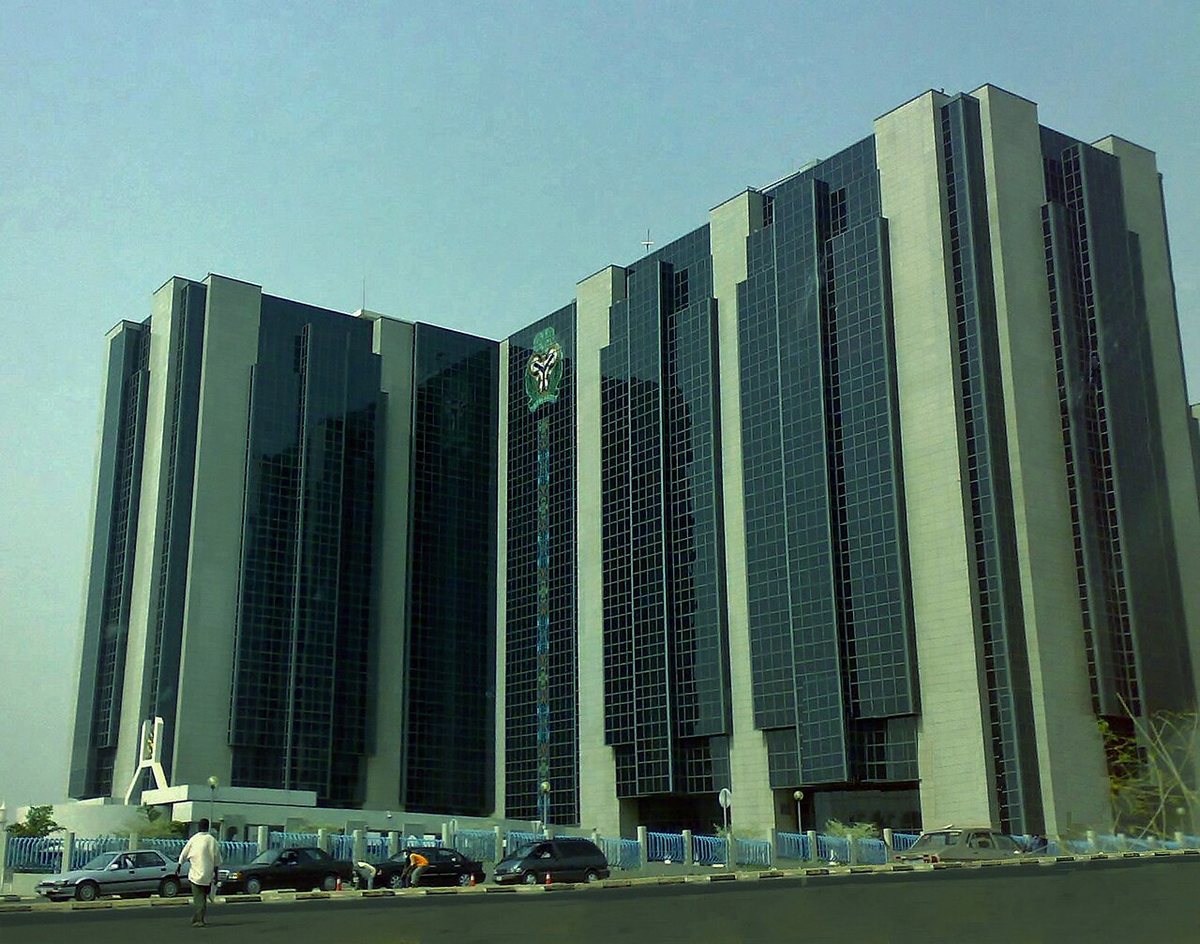
Today is March 31, 2026. The date we flagged back in January as an "extinction event for the unprepared" has arrived. The grace period is over. What follows is not a prediction — it's a scorecard.
Back in "The Great Filter," we predicted three outcomes: public offers, forced mergers, and strategic downgrades. All three happened, roughly on schedule. Here's how the sector actually shook out.
First, the Rule That Made This Hard
The CBN issued the circular on 28 March 2024, giving banks a 24-month window that ran from 1 April 2024 to 31 March 2026. The new minimums:
But the number was never the hard part. The definition was. The CBN specified that the requirement had to be met with share capital and share premium only — explicitly excluding retained earnings, revaluation reserves and other components of shareholders' funds that banks had historically leaned on.
That single clause is what turned a capital target into a genuine filter. A bank could be profitable, well-reserved and comfortably above its old capital adequacy ratio, and still be nowhere near compliant, because decades of accumulated retained earnings simply didn't count. It forced banks to go and find new money from actual investors.
"The CBN didn't ask banks to be strong. It asked them to prove someone new was willing to fund them. Those are very different tests."
The circular also spelled out the three ways to comply — raise fresh equity, pursue mergers and acquisitions, or downgrade to a lower licence category. Those weren't our predictions. They were the regulator's own menu, and the sector worked through all three.
The Winners: The Public Offer Route
The "FUGAZ" cohort — the systemically dominant banks — largely cleared the International tier through public offers and rights issues launched well ahead of the deadline. Access, Zenith, GTCO, UBA, FCMB, Fidelity and Stanbic IBTC were all in the market across 2024 and 2025, and several of those raises were oversubscribed. That matters as a signal: even in a high-inflation, high-rate economy, there was real appetite to fund Nigerian banking equity.
There is precedent for how decisive this kind of exercise can be. The last time Nigeria did this — Soludo's 2004-2006 consolidation, which lifted minimum capital from ₦2 billion to ₦25 billion — the sector went from 89 banks to 25.
The Middle: Mergers of Necessity
As covered three weeks ago, the Tier-2 "middle class" of banking was the kill zone we predicted. Several names that entered the year as independent National licensees exit today mid-merger or newly absorbed — proof that "too big to be regional, too small to scale alone" was the correct diagnosis, not just a turn of phrase.
The Three Outcomes, Scored
The Quiet Category: Dignified Downgrades
A handful of banks did exactly what we said "isn't shameful" — they voluntarily surrendered their National ambition and settled into the Regional tier (₦50B), choosing to be a profitable smaller player over a struggling bigger one. This is the outcome that gets the least press coverage and is arguably the healthiest one on this list.
"A bank that right-sizes its ambition to match its balance sheet is not failing. It's the only participant in this Great Filter that read the room correctly."
Check Any Bank Yourself
Rather than take a headline's word for a bank's status, plug in the numbers from its latest disclosed financial statement. The math is the same regardless of who's telling the story.
Why the CBN Did This At All
Raising capital requirements twenty-fold in some categories is an extraordinary intervention. The stated rationale is worth taking seriously rather than treating as boilerplate.
The core argument is erosion. The ₦25 billion minimum set in 2005 was a serious sum at the time — worth roughly $190 million at the exchange rate then prevailing. By 2024, after successive devaluations took the Naira past ₦1,500 to the dollar, that same ₦25 billion was worth under $20 million. The requirement hadn't been relaxed; inflation and currency depreciation had quietly gutted it. Banks were nominally as capitalized as in 2005 and, in dollar terms, roughly a tenth as strong.
The second argument is capacity. The federal government's stated ambition of a $1 trillion economy requires a banking sector able to underwrite very large transactions — infrastructure, energy, industrial projects. A bank's single-obligor limit, the most it may lend to one borrower, is set as a percentage of its capital base. Small capital means small maximum tickets, which means the largest Nigerian projects must be financed offshore, in dollars, by foreign lenders. Raising capital raises the ceiling on what Nigerian banks can finance at home.
"The requirement wasn't really raised. It was restored — and then extended, so that Nigerian banks could finance Nigerian ambitions rather than watching them be underwritten abroad."
The Costs Nobody Puts on the Scorecard
An honest audit has to include what this exercise cost, not only what it achieved.
- Dilution. Existing shareholders who couldn't follow their money in rights issues saw their ownership percentage fall. For long-term retail holders of Nigerian bank stocks, compliance was paid for partly out of their stake.
- Concentration. Fewer, larger banks means less competition. The 2005 consolidation delivered stability and also entrenched a handful of dominant institutions. Every bank absorbed in 2026 is one fewer competitor bidding for your deposit and your loan business.
- "Too big to fail" grows. Consolidation concentrates systemic risk. When the survivors are larger, the consequences of any one of them failing are correspondingly greater — which is precisely the dynamic that makes future public rescues more likely, not less.
- Job losses. Mergers produce duplicate branches, duplicate back-office functions and duplicate management. Consolidation is efficient exactly because it removes roles.
None of that makes the policy wrong. It makes it a trade — more resilience and more financing capacity, purchased with less competition and more concentration. Reasonable people can weigh that differently, and the weighing deserves to be explicit rather than buried under a compliance headline.
Questions People Actually Ask
Why didn't retained earnings count toward the requirement? +
Is a bank that downgraded its licence in trouble? +
Does more bank capital mean I can finally get a loan? +
Will there be another recapitalization? +
What Happens Next
The Great Filter doesn't end today — it just moves from "meet the deadline" to "prove the new capital was worth raising." The next twelve months determine whether recapitalized banks actually expand credit to the real economy, or simply sit on the capital as a compliance trophy. That's the story we'll be tracking through the rest of 2026.
There is a concrete way to judge it, and it doesn't require insider access. Watch the loan-to-deposit ratio published in bank results. If capital rose sharply while lending to the private sector stayed flat, the money went into government securities — profitable for the bank, inert for the economy. If private-sector credit grows alongside the new capital, the policy did what it claimed it would.
This article is a fundamental analysis based on publicly available financial data. It is intended for educational purposes only and should not be taken as a recommendation to buy or sell any specific security.
Market data is subject to change. The author (Odiete) may hold positions in some of the assets mentioned. Please consult a licensed financial advisor before deploying capital.

Odiete Oghenesuvwetoba Efemena
Technology Risk & IT Audit
Computer Science graduate and ICAN Professional-level candidate working toward technology risk and IT audit. I write about Nigerian fintech, financial policy, and the systems and controls underneath them.