The Q1 2026 GDP Report: Reading Between the Lines
The headline says growth. Your payslip disagrees. Here is how to read a GDP report like an accountant instead of a headline writer — and why 'growth' and 'you got richer' are two different claims.
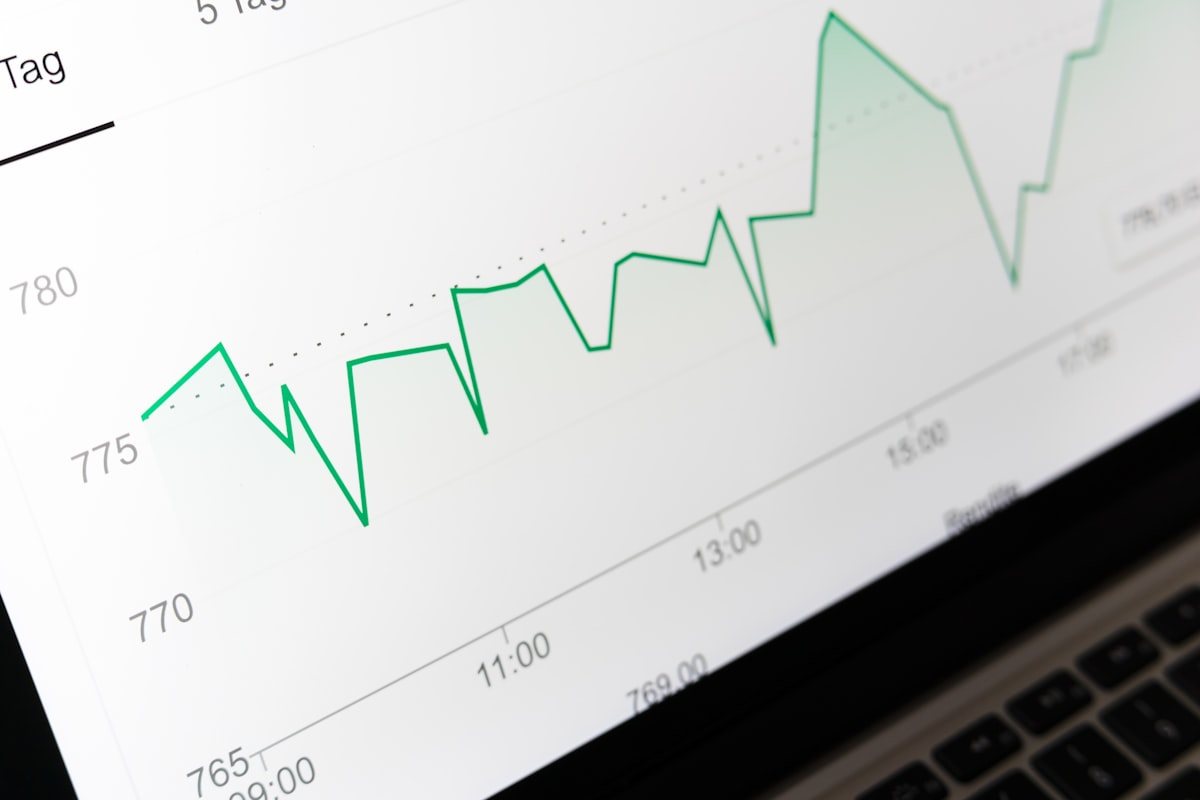
The National Bureau of Statistics dropped the Q1 2026 flash estimate this week, and the headline number is exactly the kind of thing that gets quoted without being understood.
"Nigeria's economy grew." Grew for whom? Grew where? Grew in what currency? A GDP print is a single number standing in for millions of individual transactions, and the way it's constructed hides as much as it reveals.
Nominal vs. Real: The First Trap
If prices rise 22% and the economy's nominal output rises 22%, GDP growth prints at roughly 22% — but nothing was actually produced. Nobody got a single extra bag of rice or an extra hour of electricity. That's nominal growth, and it's mostly just inflation wearing a growth costume.
Real GDP growth strips out that price effect. It's the number that tells you whether the economy actually produced more stuff. When you see a headline like "GDP grew 3.4%," check whether that's the real or nominal figure — Nigerian financial media is not always careful about labeling this distinction, and the gap between the two numbers this quarter is unusually wide given where inflation currently sits.
// The Distinction That MattersNominal_GDP_Growth = Real_Growth + Inflation;// If Nominal ≈ Inflation, Real_Growth ≈ 0.// The economy didn't grow. Prices did.
Per Capita: The Second Trap
Nigeria's population grows by roughly 2.4% a year. If GDP grows 2.4% and population grows 2.4%, the average person's slice of the economic pie is unchanged — flat, not growing. GDP per capita is the number that actually maps to whether individual living standards are improving, and it's the number most headlines quietly skip.
This is exactly why "the economy grew" and "your payslip didn't move" can both be true statements at the same time. They're answering different questions.
The Third Trap: Nigeria Has Rewritten This Number Before
The most instructive thing that ever happened to Nigerian GDP had nothing to do with production at all.
In April 2014, the National Bureau of Statistics rebased GDP — updating the base year from 1990 to 2010 so the calculation would finally capture industries that barely existed in 1990, most obviously Nollywood, telecoms and modern financial services. The result: Nigeria's measured economy roughly doubled overnight, to around $510 billion, and the country vaulted past South Africa to become Africa's largest economy.
Not one additional good was produced on the day that number changed. Not one Nigerian became better off. The statisticians simply started counting things that had been invisible in the old basket.
// April 2014, the day Nigeria "became" Africa's largest economyOld_Base_Year = 1990; // no Nollywood, negligible telecomsNew_Base_Year = 2010; // counts what actually existsMeasured_GDP: ~$270bn -> ~$510bnActual_Output_Change: 0
The NBS has since rebased again, moving to a more recent base year and, in the same exercise, rebasing the Consumer Price Index. Rebasing is legitimate and necessary statistical housekeeping — economies genuinely do change shape. But it means any comparison across a rebasing boundary is comparing two different rulers, and headlines almost never say so.
Which Sectors Actually Carry Nigerian Growth
Here is the fact that surprises people most: oil is a small share of Nigeria's GDP. Depending on the quarter it runs somewhere around 5-10% of total output. Services — telecoms, trade, and financial services — do most of the lifting, and agriculture employs far more people than oil ever has.
So why does oil dominate every conversation about the Nigerian economy? Because GDP share and foreign exchange share are completely different things. Oil has historically supplied the overwhelming majority of Nigeria's export earnings and a large chunk of government revenue. It is a small part of what the country produces and a huge part of the dollars it earns.
"Oil is a small slice of what Nigeria makes and a giant slice of what Nigeria earns in dollars. Confusing those two is how most bad takes about this economy begin."
That gap explains a pattern Nigerians know in their bones: GDP can print positive while an oil-price slump still wrecks the exchange rate, government budgets, and import prices. It is also why the 2016 recession (triggered by an oil-price collapse) and the 2020 recession (COVID plus another oil crash) both hit so hard despite oil's modest GDP weight.
"GDP tells you the size of the pie grew. It says nothing about who got a bigger slice."
How a GDP Figure Is Actually Built
Understanding where the number comes from tells you a great deal about what it can and cannot know.
GDP is most commonly assembled by the expenditure approach: household consumption, plus investment, plus government spending, plus exports minus imports. For Nigeria, household consumption dominates — which sounds like it should make GDP a good proxy for how ordinary people are doing. The problem is measurement.
Here is the structural difficulty. The overwhelming majority of Nigerian economic activity happens informally — the trader in Oyingbo market, the okada rider, the tailor, the POS agent, the roadside mechanic. None of them file returns that flow neatly into a national accounts spreadsheet. Their output is estimated, using survey data and modelled assumptions, not counted.
This isn't a criticism of the NBS, which faces the same challenge as every statistical agency in a developing economy and is generally regarded as methodologically serious. It's a caution about precision. When a flash estimate reports growth to one decimal place, that decimal implies a confidence the underlying data collection cannot really support — which is precisely why flash estimates get revised.
"A GDP print is a well-constructed estimate of an economy that mostly does not file paperwork. Treat the direction as informative and the decimal point as decorative."
What GDP Deliberately Refuses to Measure
Even a perfectly measured GDP would stay silent on most of what determines whether a country is a good place to live. This isn't a flaw so much as a scope limitation that headlines routinely forget.
- Distribution. GDP is a total. An economy where the gains concentrate among a small group and one where they spread broadly produce identical prints.
- Depletion. Pumping and selling oil counts fully as output. The fact that the reserve is now smaller is not netted off. A country can literally sell its balance sheet and book it as income.
- Defensive spending counts as growth. This one bites hardest in Nigeria. Every generator bought because the grid failed, every borehole sunk because there is no water supply, every private security guard hired because policing is thin — all of it adds to GDP. Spending forced on you by infrastructure failure is indistinguishable, in the national accounts, from spending on things you actually wanted.
- Unpaid work is invisible. Household labour, subsistence farming and childcare — enormous in real economic value — register as zero.
Read those together and a strange conclusion follows: Nigeria's infrastructure deficit inflates its GDP. A country that fixed its power grid tomorrow would see the entire generator-and-fuel economy — a sector plausibly worth over $10 billion a year — vanish from the accounts. Measured GDP would fall. Actual welfare would rise sharply.
A Practical Reading Protocol
None of this means ignore GDP. It means read it in a specific order, and the order matters more than the number.
Reading Any Nigerian GDP Report in Six Steps
- ☐ Confirm whether the figure quoted is real or nominal — if the report doesn't say, assume nothing
- ☐ Subtract ~2.4% population growth to get the per-person picture
- ☐ Check whether it is a flash estimate (subject to revision) or a final figure
- ☐ Check whether the comparison period crosses a rebasing boundary — if so, the comparison is invalid
- ☐ Look at the sector breakdown, not the headline: services, agriculture and oil tell three different stories
- ☐ Finally, ignore all of it and check whether your own income beat your own inflation
Tap an item to cross it off.
Questions People Actually Ask
If oil is only a small share of GDP, why does an oil crash hurt so much? +
Was the 2014 rebasing dishonest? +
Why does GDP grow while I feel poorer? +
Which number should I actually watch instead? +
The Test That Actually Matters to You
Forget the national number for a second. The question that determines your household's reality is simpler: did your income grow faster than prices? Run your own numbers below.
If that tool shows a real pay cut even in a quarter where the national GDP print is positive, you now understand exactly why "the economy is growing" and "I feel poorer" are not a contradiction. They're two different measurements, and only one of them is about you.
This article is a fundamental analysis based on publicly available financial data. It is intended for educational purposes only and should not be taken as a recommendation to buy or sell any specific security.
Market data is subject to change. The author (Odiete) may hold positions in some of the assets mentioned. Please consult a licensed financial advisor before deploying capital.

Odiete Oghenesuvwetoba Efemena
Technology Risk & IT Audit
Computer Science graduate and ICAN Professional-level candidate working toward technology risk and IT audit. I write about Nigerian fintech, financial policy, and the systems and controls underneath them.