The SME Credit Gap: Why Your Business Can't Get a Loan (And What To Do About It)
Small businesses generate most of Nigeria's employment and almost none of its bank lending. The gap isn't an accident — it's a rational response by banks to a specific set of risks. Here is how to close it from your side.
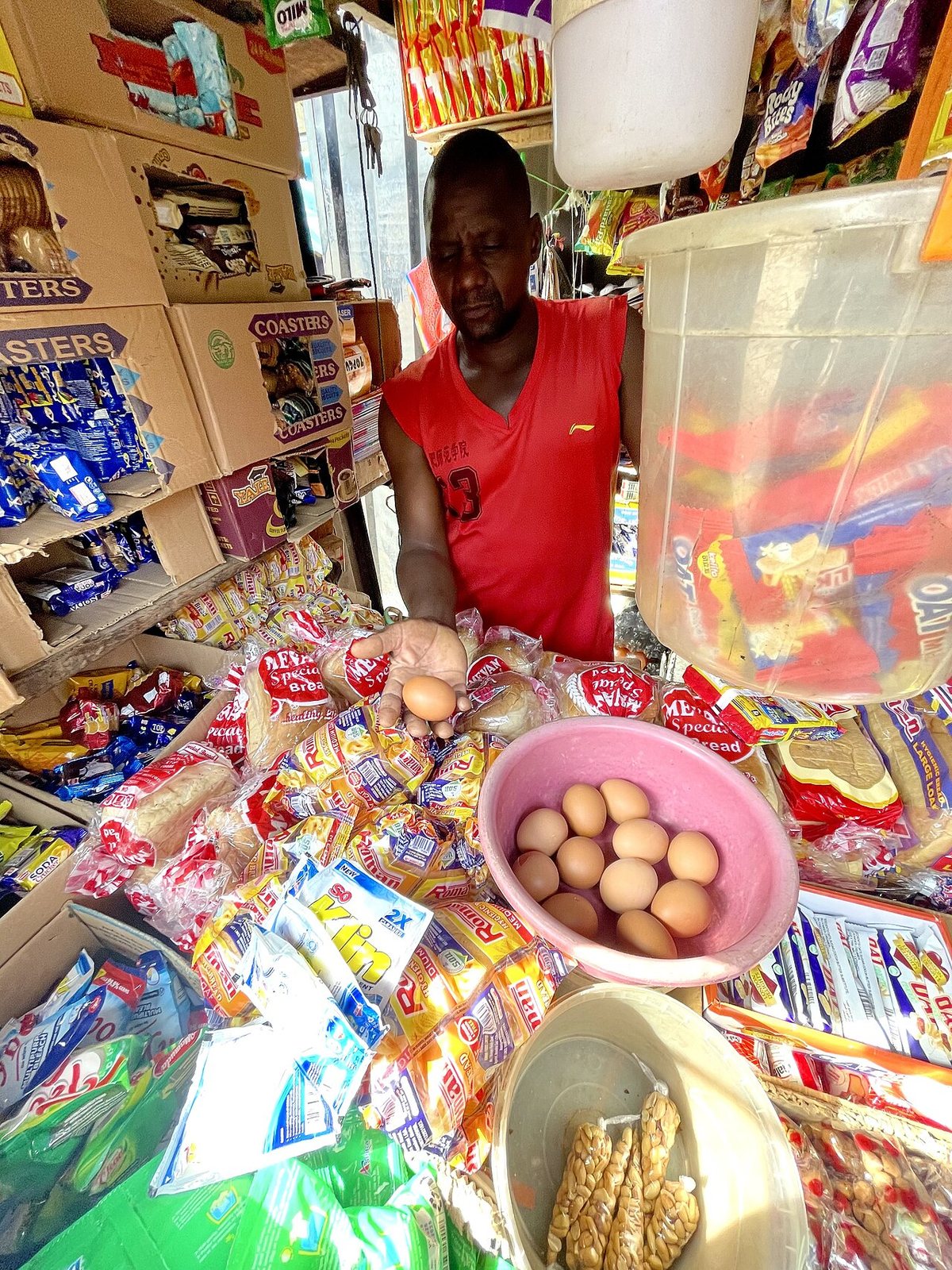
Small and medium businesses account for the overwhelming majority of jobs in Nigeria, and a genuinely tiny fraction of formal bank credit. That imbalance isn't new, but the post-recapitalization banking sector makes it more urgent to understand.
The scale of the mismatch is worth stating precisely. Joint surveys by SMEDAN and the NBS have consistently found that MSMEs make up around 96% of Nigerian businesses and close to 90% of employment, contributing roughly half of GDP. Their share of commercial bank lending has long been estimated in the low single digits — commonly cited at under 5%.
// The Nigerian MSME paradoxShare_of_businesses: ~96%Share_of_employment: ~87%Share_of_GDP: ~50%Share_of_bank_credit: <5%
The instinctive read is "banks don't want to lend to small businesses." The more useful read is: banks are rationally pricing a risk that most small businesses haven't done the work to reduce. That distinction matters, because the second framing gives you something you can actually act on.
Why Banks Say No
The Bank's View
- No audited financials to underwrite against
- Personal and business finances blended together
- No collateral, or collateral with unclear legal title
- High cost to process a small loan relative to its size
What This Actually Means
None of these are permanent facts about your business. Every one of them is fixable within a few months of deliberate effort — which is exactly why they're worth fixing before you apply, not after a rejection.
The Fixable List
-
01.
Separate the accounts. A business account with 12 months of clean, consistent transaction history is the single cheapest credibility signal you can build.
-
02.
Get basic bookkeeping in place. You don't need a full audit — a simple, consistent income statement and balance sheet, even self-prepared, changes how a loan officer reads your application.
-
03.
Start with trade finance, not a term loan. Supplier credit and invoice financing are easier to qualify for and build the track record that eventually unlocks a bigger facility.
"You are not being rejected because you're small. You're being rejected because you're illegible. Those are different problems, and only one of them is solvable in a weekend."
The Collateral Rule That Changed (And Almost Nobody Uses)
"No collateral" has always meant one thing in Nigerian lending: no land, no certificate of occupancy, no loan. If your capital is tied up in inventory, equipment or unpaid invoices rather than real estate, you were structurally unbankable.
That changed legally in 2017. The Secured Transactions in Movable Assets Act — paired with the National Collateral Registry the CBN established the year before — made it possible to register movable assets as loan security. Inventory, machinery, vehicles, receivables and even livestock can be pledged and registered, giving the lender a searchable, enforceable claim.
Uptake among small businesses has been far below what the reform intended, largely because most business owners have simply never heard of it. If your loan conversation has stalled on collateral, this is worth raising explicitly with your relationship manager — the legal machinery exists, it is just underused.
Two other levers are worth knowing: your credit history is being recorded whether you engage with it or not, by licensed bureaus including CRC, FirstCentral and CreditRegistry — you can request your own report and correct errors before a bank pulls it. And the Development Bank of Nigeria and Bank of Industry exist specifically to on-lend to MSMEs through participating banks, generally at rates below open-market commercial pricing.
If You Do Get the Offer, Audit It
Getting approved is only step one. At current rates, the difference between good and bad debt for a small business is razor thin. Before you sign, run the actual numbers.
A loan that funds inventory turning over faster than the interest accrues is good leverage. A loan just plugging a cash flow hole with no clear repayment source is the same trap that sinks half the businesses that do manage to get funded. Know which one you're signing before you sign it.
The Bank's Arithmetic, From Its Side of the Desk
It's worth spending a moment inside the loan officer's spreadsheet, because once you see it the rejection stops feeling personal and starts looking like a solvable problem.
Processing a loan costs roughly the same whether it is ₦500,000 or ₦500 million. The same credit assessment, the same documentation review, the same committee, the same monitoring. On a large ticket that fixed cost is trivial. On a small one it can exceed the entire interest margin.
Now stack the alternative. A Nigerian bank can buy government Treasury Bills — zero credit risk, zero processing cost, no monitoring — at yields that, through 2024, exceeded 20%. Against that benchmark, lending to a small business with no audited accounts and no collateral has to be priced very high indeed to be worth the trouble.
This reframes the whole problem. You are not competing against other small businesses for a loan. You are competing against a government bond. Every element of "legibility" — clean statements, separated accounts, a credit history, registered collateral — is really an argument that you are a better risk-adjusted proposition than that bond.
"When the government pays a bank 20% to take no risk at all, an unaudited small business asking for money is not making a modest request. It is making a competitive pitch."
The Ladder Most Businesses Skip
Businesses tend to ask for the term loan first, get declined, and conclude that formal credit is closed to them. There's a sequence, and each rung makes the next one reachable.
Supplier credit comes first. Your suppliers already know your payment behaviour, and asking for 30-day terms is easier than any bank conversation. It is real financing, and it establishes a documented trade record.
Then invoice financing, where the credit decision rests largely on your customer's ability to pay rather than yours. If you supply a large, creditworthy buyer, that buyer's strength can be borrowed against.
Then a small, secured facility — deliberately smaller than you need, and repaid impeccably. The purpose is not the money. It is to create the repayment history that makes the next request routine.
Then the term loan you originally wanted, now supported by a documented relationship rather than a cold application.
Alongside that ladder sit the development institutions built for exactly this gap. The Bank of Industry and the Development Bank of Nigeria on-lend to MSMEs through participating commercial banks, generally at rates below open-market pricing. The paperwork is heavier and the timelines longer, but the pricing difference is large enough to be worth the patience.
When You Should Not Borrow
An article about access to credit has an obligation to say this clearly: a meaningful share of businesses seeking loans should not get one, and the loan would accelerate rather than prevent their failure.
Borrow to fund something that generates cash faster than the interest accrues — inventory that turns, equipment that raises output, an order already contracted. Do not borrow to cover ongoing losses, to pay last month's salaries with no revenue change in sight, or because a competitor expanded. At Nigerian rates, debt is an accelerant. It makes a working business bigger and a broken one fail sooner.
The 12-Month Plan to Become Bankable
- ☐ Open a dedicated business account and route every transaction through it
- ☐ Build 12 months of clean, consistent transaction history before applying
- ☐ Prepare a simple income statement and balance sheet — self-prepared is fine to start
- ☐ Request your credit report from CRC, FirstCentral or CreditRegistry and fix errors
- ☐ Register movable assets under the 2017 collateral framework if you lack land
- ☐ Ask suppliers for 30-day terms before asking a bank for anything
- ☐ Take a small facility first and repay it flawlessly to build a record
- ☐ Ask your bank specifically about BOI and DBN on-lending windows
Tap an item to cross it off.
Questions People Actually Ask
My business is profitable. Why was I still declined? +
Do I need audited accounts? +
What if I have no land to pledge as collateral? +
Are government intervention funds worth pursuing? +
This article is a fundamental analysis based on publicly available financial data. It is intended for educational purposes only and should not be taken as a recommendation to buy or sell any specific security.
Market data is subject to change. The author (Odiete) may hold positions in some of the assets mentioned. Please consult a licensed financial advisor before deploying capital.

Odiete Oghenesuvwetoba Efemena
Technology Risk & IT Audit
Computer Science graduate and ICAN Professional-level candidate working toward technology risk and IT audit. I write about Nigerian fintech, financial policy, and the systems and controls underneath them.